About Armada
People Own The Drones.
Armada Operates The Network.
Consumers Receive The Service.
A new architecture for autonomous logistics — built on distributed ownership, centralized operations, and market-regulated scale.
The World's First Owner-Powered Drone Logistics Network
Armada separates asset ownership from operations.
Drone Owners
Supply the aircraft
Armada Network
Operates the platform
Consumers
Receive the service
How Armada Works
Owners purchase Armada-standardized drones.
Individuals acquire production-grade, network-ready aircraft.
Owners connect their drones to the Armada network.
A single onboarding flow enrolls the asset into the platform.
Consumers and businesses place delivery requests.
Demand comes from everyday orders — food, retail, parcels, pharmacy.
Armada handles dispatch, compliance, flight, and settlement.
Operational complexity is centralized so owners don't carry it.
Owners share in the value generated by autonomous operations.
Revenue is distributed back to the people who supplied the assets.
Revenue Streams
Four reinforcing revenue lines, each compounding as the network grows.
Hardware Sales
Armada sells standardized, network-ready delivery drones to owners.
Platform Fees
Armada receives a percentage of every completed delivery on the network.
Asset Services
Operational support, maintenance routing, and network services for owners.
Value-Added Services
Insurance, financing, batteries, and future software offerings.
Why Armada Is Different
Same end product. Fundamentally different architecture.
Traditional Drone Operators
- Company buys drones.
- Company owns fleet.
- Company operates fleet.
- Company bears all capital costs.
Armada
- Owners buy drones.
- Owners provide assets.
- Armada operates the network.
- Capital requirements are distributed.
Network Effects Built Into The Model
Every new owner expands coverage. Every new consumer expands revenue. Each side compounds the other.
Market Self-Regulation
Traditional logistics operators continuously deploy more assets and infrastructure. Armada lets market incentives regulate deployment density instead.
As density increases, utilization declines. As utilization declines, ROI decreases. As ROI decreases, fewer new drones enter the market — creating a natural balancing mechanism, similar to ride-sharing marketplaces.
Capital-Efficient Expansion
Two ways to scale a logistics network. Only one of them compounds without a balance-sheet ceiling.
Traditional Model
Every new market requires the operator to fund the fleet, the ground infrastructure, and the working capital behind it.
Armada Model
Distributed ownership funds the fleet. Distributed demand funds the utilization. Armada scales by orchestrating both sides — not by buying its way in.
Economics Per Drone
Designed to create sustainable value for both owners and the platform.
Assumptions
- Deliveries per day
- 6
- Average delivery fee
- $4
- Operating days / year
- 365
Annual Revenue
Revenue Split
Illustrative example only. Real-world economics will depend on market density, regulation, weather, demand mix, and platform terms.
Why Density Matters
- Low-density environments may generate higher deliveries per drone.
- High-density environments increase network coverage but may reduce individual utilization.
- Armada is designed to balance network growth with owner economics over time.
What Owners Are Really Buying
Not a product. A position in autonomous infrastructure.
- Access to a future autonomous logistics network.
- Ownership participation in autonomous infrastructure.
Technology Built For Autonomous Logistics
Armada combines autonomous flight systems, safety infrastructure, and operational software into a scalable logistics platform.
Autonomous Flight
- Fully autonomous BVLOS operations.
- Multi-sensor navigation.
- Real-time decision making.
Safety Systems
- Multi-layer redundancy.
- Parachute recovery.
- Lost-link protection.
- Airspace awareness.
Network Operations
- Mission dispatch.
- Fleet monitoring.
- Compliance management.
- Revenue settlement.
Kyra Ground Control System
- Real-time monitoring.
- Airspace awareness.
- Fleet coordination.
Drone Situational Awareness
Armada drones are designed to understand their surrounding airspace in real time.
A live perception model around every Armada drone — fusing onboard sensors with network intelligence to keep flight safe, predictable, and accountable.
Sensor Fusion
Combines GPS, IMU, vision, and telemetry data to maintain spatial awareness.
Airspace Monitoring
Tracks nearby aircraft, obstacles, route boundaries, and restricted zones.
Conflict Alerts
Detects potential proximity conflicts and triggers warnings before risk escalates.
Autonomous Decision Support
Supports safe routing, mission monitoring, and exception handling during delivery.
Conceptual visualization for product demonstration. Actual operational capabilities depend on system validation and regulatory approval.
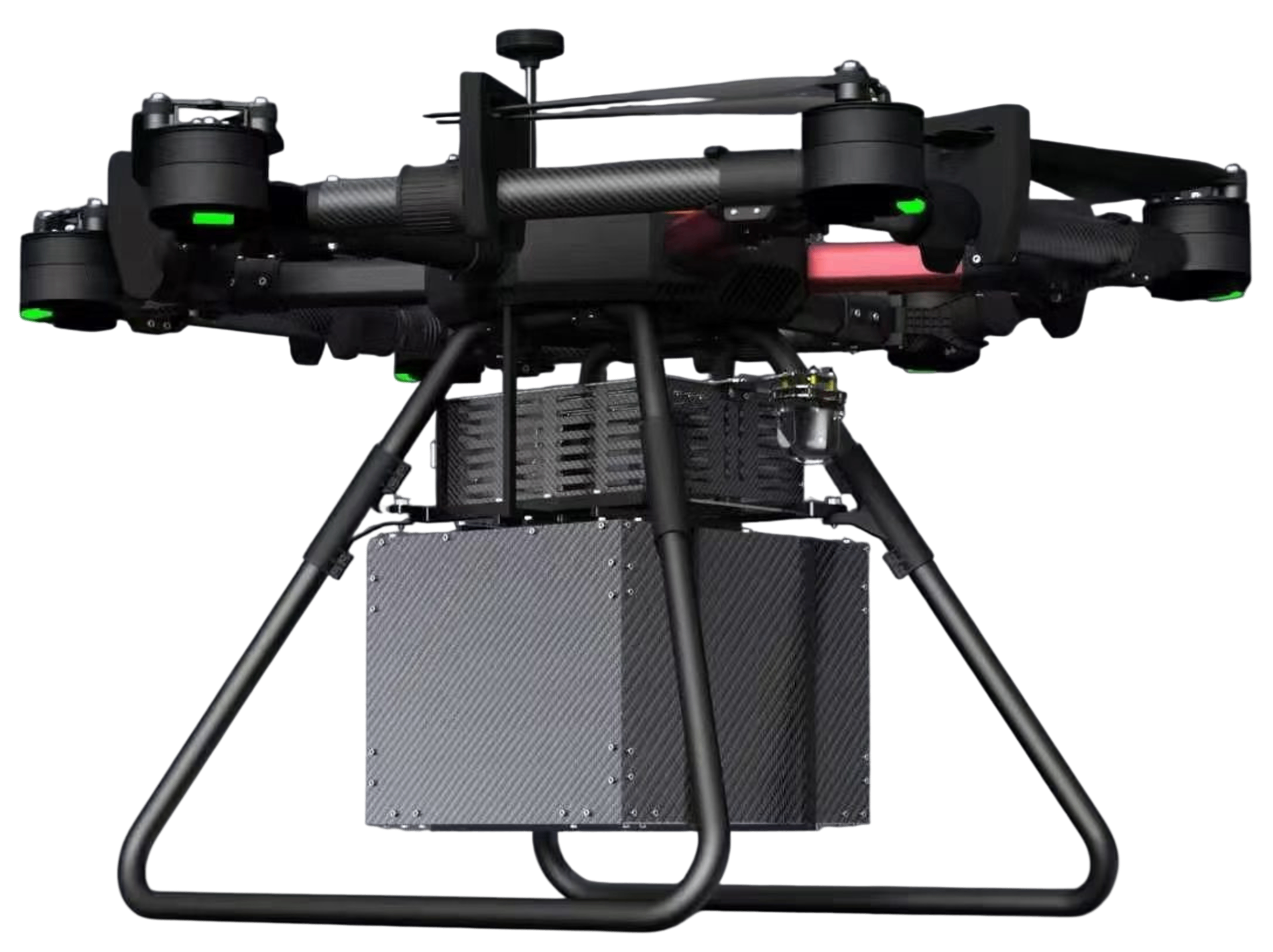
Armada Drone
Designed for rural and suburban logistics.
- Payload
- 18 lb
- Round-trip range
- 15–25 mi
- Endurance
- 30–45 min
- Delivery
- Precision winch
Technology Is The Foundation. The Network Is The Product.
Armada is not building a better drone. Armada is building a better way to deploy autonomous logistics at scale.
People Own The Drones.
Armada Operates The Network.
Whether you want to deploy capital as an owner or receive deliveries as a consumer — pick your side of the network.